

The entrepreneur
Entrepreneurs are people who work to put ideas into practice. The drive to go through a process, which is usually not simple, stems from internal motivation and self-ambition. Such motivation is a key characteristic of entrepreneurs.
Being an entrepreneur means taking responsibility for the situation and taking steps to change it.
This situation can be a personal reality for the entrepreneur or a societal reality in terms of economic, social, or technological aspects.
For this reason, many leaders are also entrepreneurs, and vice versa; entrepreneurs are often the type of leaders that emerge. They have the ability to make a change and take part in shaping their future, as well as their environment.
The ability to create reality begins with the capacity to imagine an alternative reality and then take action to bring about change.
The well-remembered leaders are those who have acted and succeeded in changing a given situation.
One of those leaders is Theodor Herzl, who said, "At Basel I founded the Jewish State," which led to a change in the situation of the Jewish people.
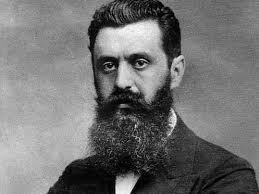
Entrepreneurship education, as part of the Entrepreneurship for Kids Program, aims to help students overcome difficulties and challenges by developing the ability to think critically and generate viable ideas that lead to success.
Self-motivated people are the antithesis of people who wait for things to happen on their own. Dr. Seuss, in his book "Oh the Places You'll Go," writes:
"You have brains in your head.
You have feet in your shoes
You can steer yourself
Any direction you choose.
You're on your own. And you know what you know.
And YOU are the guy who'll decide where to go."
Entrepreneurs understand this message and act accordingly.

The entrepreneur:
A person who has an inner desire to succeed in a particular domain can become an expert in that field. The passion will motivate him/her to learn, overcome obstacles, and move forward to success.
Despite all the efforts and risk-taking, success is not guaranteed, and numerous challenges arise along the way. The entrepreneur's motivation and ability to persevere and overcome challenges, driven by inner drive, will lead them to fulfill a dream and make it a reality.
Examples of successful entrepreneurs:

Daniel Ramot, one of the founders of Via, an Israeli company that develops an innovative and dynamic transportation system according to the passenger's needs, and operates in about 100 cities around the world, explained the motivation to work on this project as follows:
"What motivates us is the creation, to succeed in making a change, to build something meaningful that has an impact. We realized very quickly that it was a once-in-a-lifetime idea or project. It's not another one of those ideas that other people have already realized. And if we ever want to do something like that, now it's our chance."

It was said about Mark Zuckerberg when he started setting up Facebook that, "He was just super driven and focused on building Facebook. Even back then, he talked about Facebook as being this thing that was going to be something that everyone in the world used."
Source: Interview with Kevin Systrom, co-founder of Instagram.
Shon Tal, the founder of the Israeli Yad 2 (Second hand) website, said in an interview with the Globes newspaper, about the desire for success: "The first period of activity was the hardest of my life. A year before launching the site, I started working on it, and in the first two years of its establishment, I didn't sleep at night. I woke up four times a night, working on the computer, the management, and the systems we built."


The desire to cultivate inner motivation in children and adults arises periodically.
There are various methods, and in fact, it appears that there is no single correct method suitable for everyone.
Nevertheless, research has proven that there's a need for a process that is accompanied by progression and successes to foster inner motivation.
Every little success motivates us to try and move on to the next challenge. These challenges may be minimal and seemingly insignificant, but they encourage us to keep acting and continue trying, driven by a desire to succeed again.
In fact, if we think about it, we understand that children, as well as many adults, enjoy playing video games. One reason for this is that the games are based on stages. The first stages are relatively easy, and each time we advance to the next level, we experience a sense of success and are ready for the next one.
Jeff Haden studied what motivates people and summarized his conclusions in his book, The Motivation Myth. Actually, Haden also found that motivation comes from small successes, making us feel delighted and encouraging us to keep going.
On the other hand, if we play a game and fail to progress to the next stage, we often despair and abandon it.
This sense can also be applied in our daily lives and motivate children and people.
After a certain point, the desire to succeed becomes an intrinsic part of oneself, stemming from the self-confidence built up over time and creating internal motivation.

There are several similarities between sports and entrepreneurship. One of them is internal motivation.
Guy Niv, the first Israeli to participate in and complete the Tour de France race, said: "The motivation for professionalism and strength stems from the desire to succeed and fulfill yourself."
This is also the primary drive that leads to entrepreneurs' success. Later, he continued, "The economic motive also enters the picture."
According to him, "You need to do it out of passion and true love. There's no chance any other motive in the world will bring you to this madness."
Entrepreneurs must have an internal motivation similar to Guy's to overcome the roller coaster of the entrepreneurial process.
